Here's something I tell every buyer who's considering Woodstock but hasn't quite committed: the things that make people want to visit this town for a Saturday are the same things that make them never want to leave. A walkable Main Street lined with independent shops, murals, and sidewalk cafes. A trail system that winds through actual nature inside city limits. A food and arts scene that keeps you engaged without driving 35 miles to Atlanta. I moved here because of all of this — and in nearly three decades of working in real estate across Georgia, I've seen very few places where the lifestyle and the investment align this cleanly.
If you're thinking about moving to Woodstock, Georgia, this article is for you. Not for the day-tripper looking for a fun afternoon — for the buyer asking, "Is this the kind of place where I actually want to plant roots?" My honest answer: yes. And here's why it matters for your wallet too.
Main Street Is the Product — and It's Rare
Most Atlanta suburbs have a "downtown" that's really just a strip mall with better landscaping. Woodstock's Main Street is the genuine article. Independent boutiques. Local art galleries. Murals that tell a story instead of advertising something. A complete absence of chain restaurants crowding out the character. It's the kind of place where you run into your neighbors not because you planned it, but because you both had the same idea about brunch.
That walkability isn't just pleasant — it has a measurable effect on property values. Homes within comfortable walking distance of a vibrant downtown consistently command a premium over comparable homes in car-dependent neighborhoods. When you invest in a home near Woodstock's Main Street corridor, you're investing in an asset that's structurally harder to replicate than a new subdivision with a nice pool.
"In 28 years of real estate, I've learned that the communities people don't want to leave are the ones where values hold. Woodstock is one of those places." — Cindi Blackwood
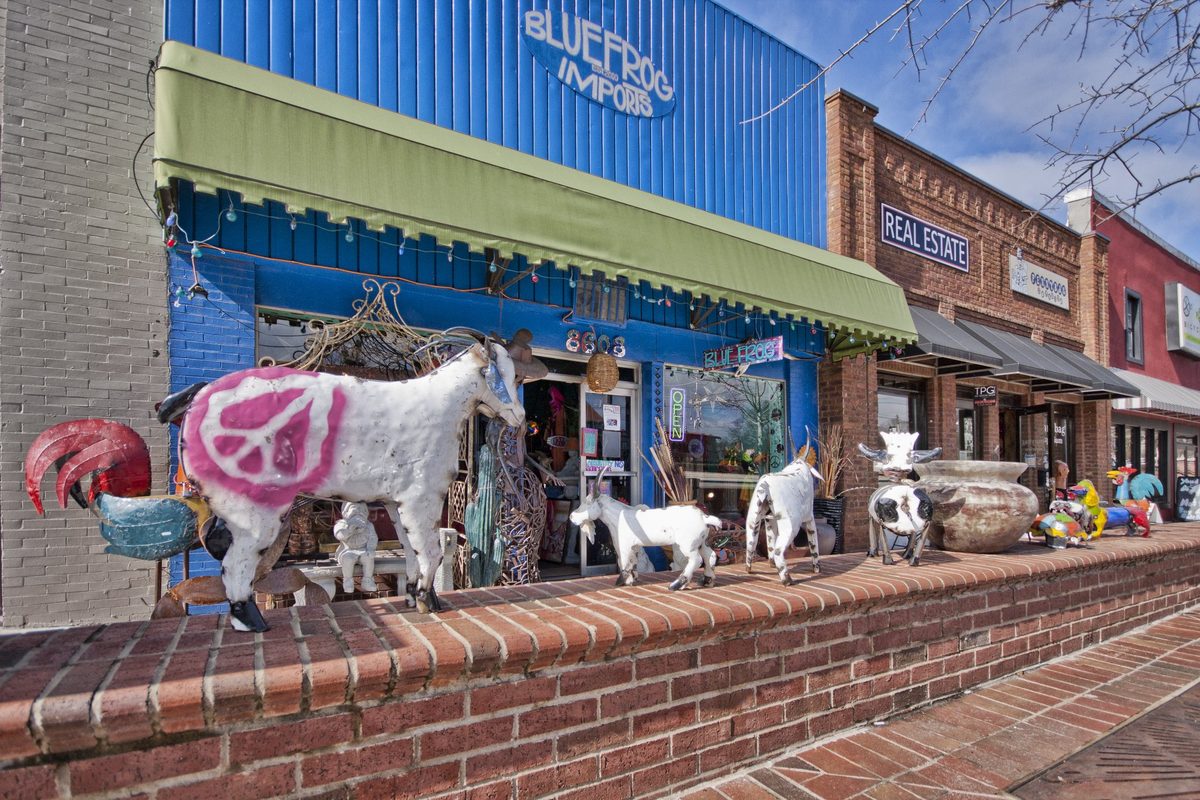
Blue Frog Imports on Main Street — this is what "no chain stores" actually looks like. Every building has a story.
Nature Inside the City Limits: The Little River and Greenprints Trail
One of the things that genuinely surprised me when I moved here was discovering that you don't have to leave town to hike, bike, or just take a long walk somewhere that doesn't involve a parking lot. The Little River runs right through the heart of Woodstock, and the Greenprints Trail system connects neighborhoods to the river, to parks, and to each other in a way that most Georgia suburbs can only dream about.
Johnston Park gives you 18 acres of green space — fields, a splash pad, covered shelters — all within a short drive or bike ride from downtown. For buyers with kids, for buyers who like to stay active, and for buyers who simply don't want to feel like they're living inside a concrete grid, this trail access is a genuine quality-of-life differentiator. It also protects the character of the community from the creeping homogenization that swallows other Atlanta suburbs.
Food, Coffee, and the Community Gathering Effect
A town's restaurant and coffee scene tells you something real about who lives there and how they feel about where they live. Woodstock's is thriving. Sidewalk dining on Main Street. Reformation Brewery, which has become a genuine community anchor — not just a place to get a pint, but a venue where people meet, where events happen, where you start to recognize faces. The Woodstock Farmers Market draws regulars who take it seriously as a place to shop, not just as a seasonal novelty.
This matters for more than quality of life. Communities with active gathering places — breweries, coffee shops, farmers markets, walkable dining — consistently outperform bedroom-community suburbs in long-term property value retention. People who feel connected to where they live maintain their homes better, invest in their neighborhoods, and don't leave. That low-churn dynamic is exactly what you want as a property owner.
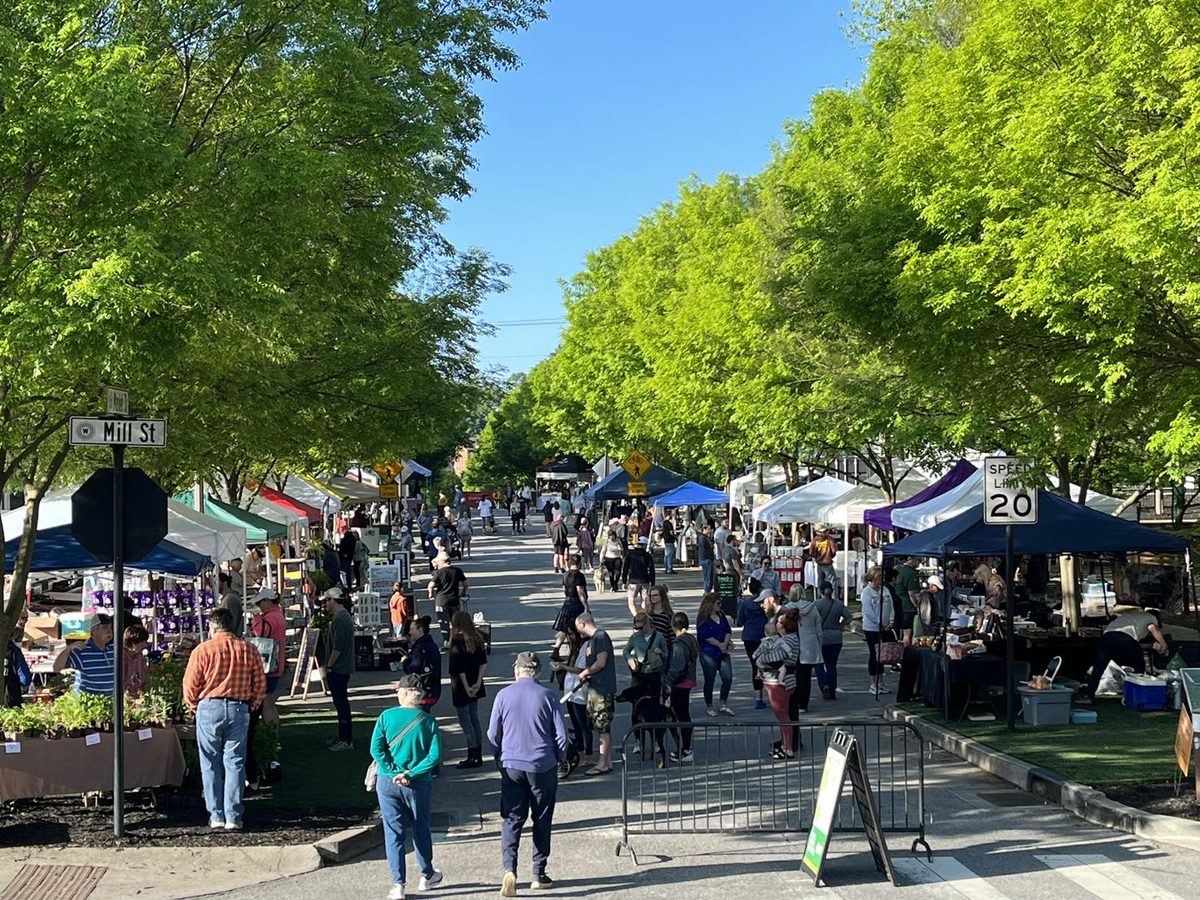
The Woodstock Farmers Market on Mill Street — a Saturday ritual for residents, not just a seasonal photo op.
Entertainment That Keeps You Here
One of the silent killers of suburban quality of life is the "nothing to do here" syndrome — the feeling that anything worth doing requires a highway. Woodstock has been quietly solving this problem for years.
- MadLife Stage & Studios — a nationally recognized live music venue that pulls headliners you'd expect to see in a major city. On a Tuesday night, you can walk to a show.
- Blue Ghost Arcade — a retro gaming bar that's become a go-to for residents of all ages and a genuine piece of local character.
- Woodstock Arts Theatre — community theater that's been cultivating local artistic talent and giving residents a reason to dress up on a Friday night for decades.
- Northside Hospital-Cherokee Amphitheater — outdoor summer concerts and seasonal festivals that turn the community into a living room. The Fourth of July alone draws thousands of residents who actually want to be there.
None of this requires a trip to Atlanta. That's the point.
Railroad History and Authentic Architecture
There's something about a town with genuine railroad heritage that resists the pressure to become generic. Woodstock's historic downtown has buildings that actually date to the late 1800s — repurposed, renovated, and breathing again, but authentic in a way that cookie-cutter new construction simply cannot recreate. That authenticity is increasingly rare in the Atlanta metro, and rarity drives value.
Buyers who've toured other Cherokee County communities often come to Woodstock and feel something shift. It's harder to articulate than a square-footage comparison, but it's real: this is a place with a story, and you'd be adding your chapter to it.
Retail Access Without Leaving Cherokee County
One practical question buyers always ask: "But what about shopping?" The Outlet Shoppes at Atlanta, located just minutes from downtown Woodstock, gives residents access to major national brands at outlet prices — over 100 stores — without the Atlanta traffic. Pair that with the local boutiques on Main Street, and you have the full retail spectrum covered within a few miles of home.
The "People Stay Here" Dynamic — and What It Does to Home Values
Cherokee County schools consistently rank among the top in Georgia. The area has low crime rates relative to comparable suburban counties. But beyond the statistics, there's something that's harder to quantify and more important: the social fabric here is intact. Shop owners know their regulars. Neighbors actually know their neighbors. The people who move to Woodstock tend to stop moving.
That stability creates what real estate economists call "low-churn" neighborhoods — and migration data confirms it: people are coming here from New York, Los Angeles, and across the Southeast specifically because of this quality of life. Low churn means sustained demand, which means your home holds value through market cycles that shake other suburbs.
Cherokee County Real Estate Snapshot — Spring 2026
- Median home price: ~$467,000
- Average days on market: ~45 days
- ~63% of homes selling under list price
- Buyers currently have real negotiating leverage
- This affordability window won't last indefinitely
The Real Estate Case for Living in Woodstock Right Now
Here's the part where I speak as your agent, not just as a resident. The Cherokee County housing market in spring 2026 is offering buyers a window that didn't exist two years ago. Approximately 63% of homes are selling under list price. Average days on market have stretched to around 45 days. That means you have time to be thoughtful, room to negotiate, and a real chance to get into a home near downtown Woodstock at a price that will look very smart in five years.
The lifestyle that makes people want to day-trip to Woodstock isn't going to become less appealing as the Atlanta metro continues to grow. If anything, a walkable, authentic, community-centered town within 35 miles of a major city becomes more valuable as the alternative — sprawling, car-dependent, characterless suburbs — becomes less tolerable. You're not just buying a house. You're buying into one of the last genuinely charming towns at a reasonable distance from Atlanta, while it's still reasonably priced.
I chose to live here. I'd be glad to help you do the same.
Ready to Call Woodstock Home?
I'd love to show you what's available near downtown Woodstock and throughout Cherokee County. Let's find you a home that puts this lifestyle right outside your front door.
📞 Call or Text (770) 988-5469Frequently Asked Questions
Is Woodstock, GA a good place to live?
Yes — Woodstock consistently ranks among the best places to live in Georgia. The combination of a walkable downtown, strong schools, outdoor recreation, a vibrant food and arts scene, and a genuine community spirit sets it apart from typical Atlanta suburbs. Home values have held steady because the lifestyle is genuinely desirable, not just marketed that way.
What is the median home price in Woodstock / Cherokee County, GA?
As of spring 2026, the Cherokee County median home price is approximately $467,000, with homes averaging around 45 days on market. About 63% of homes are selling under list price, which means buyers currently have real negotiating leverage — a rare combination in the Atlanta metro area.
How far is Woodstock, GA from downtown Atlanta?
Woodstock is roughly 30–35 miles north of downtown Atlanta, typically a 35–50 minute drive depending on traffic. Most residents find they rarely need to go to Atlanta because Woodstock has its own thriving restaurant scene, entertainment venues, arts programming, and shopping — including the Outlet Shoppes at Atlanta just minutes away.
What neighborhoods near downtown Woodstock are best for buyers?
Neighborhoods within walking or biking distance of Main Street tend to hold value the best and see the most demand. These include areas along the Little River trail corridor, established subdivisions like Eagle Watch and Bridgewater, and new construction communities that have recently opened. I help buyers identify which neighborhoods fit their lifestyle and budget — the inventory changes quickly.
Is now a good time to buy in Woodstock, GA?
Spring 2026 is one of the more buyer-friendly windows Cherokee County has seen in several years. With 63% of homes selling under list price and days on market stretching to around 45 days, buyers have room to negotiate. That said, the lifestyle fundamentals that make Woodstock attractive aren't going anywhere — and as more people discover the area, the entry point will rise.